
Stages of Androgenic Alopecia
Hair loss affects millions of men and women, most commonly due to androgenic alopecia, commonly referred to as Male Pattern Hair Loss (MPHL), or Female Pattern Hair Loss (FPHL). This condition is primarily genetic and involves sensitivity of hair follicles to the hormone dihydrotestosterone (DHT), leading to gradual thinning and loss of hair in specific areas of the scalp. About 80% of men and 50% of women experience it during their lifetime.
In men, hair loss typically starts at the temples or crown, progressing to a receding hairline or bald patch, and may eventually lead to complete baldness. Women usually experience diffuse thinning, especially at the crown and temples, but rarely become fully bald. The pattern and progression vary by individual.
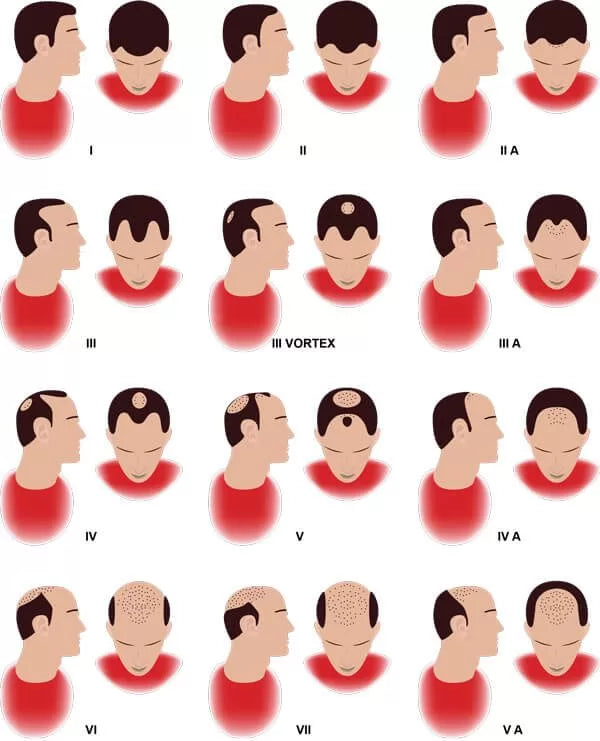
The Hamilton-Norwood scale, showing common patterns and progression of MPHL.
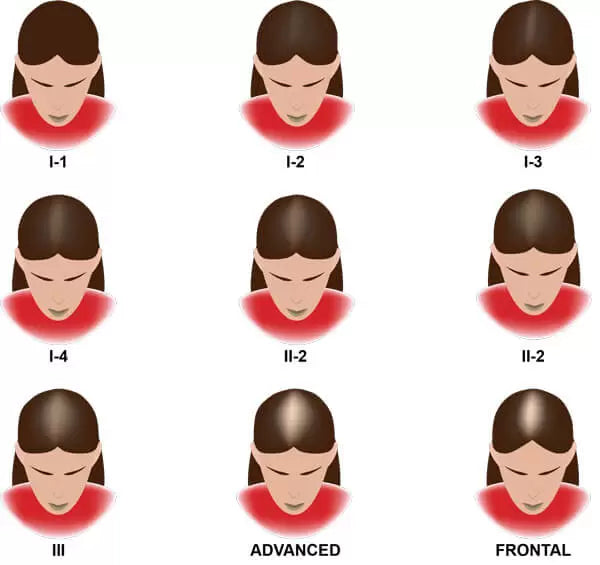
The Ludwig-Savin scale, showing common patterns and progression of FPHL.
So what is happening during the different stages of androgenic alopecia?
Hair follicles are small organs that produce hair through a repeating cycle. In the growth (Anagen) phase, hair lengthens for several years. This is followed by a resting (Telogen) phase, where growth stops and the hair remains unchanged for several months before shedding. Each follicle operates independently, so hairs are at different stages at any given time which means that various follicles may be either growing, resting, or shedding at the same time.
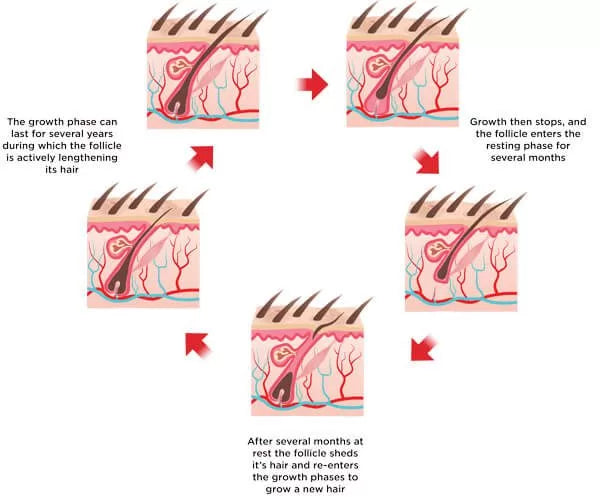
The Hair Cycle
How does androgenic alopecia affect the hair growth cycle?
Androgenic alopecia causes certain hair follicles to shrink (miniaturization) due to sensitivity to dihydrotestosterone (DHT). This shortens the growth phase and lengthens the resting phase of the hair cycle, resulting in thinner, shorter hairs that shed more quickly. Over time, affected follicles may produce hairs too small to break the skin’s surface, leading to noticeable thinning and bald patches. Only follicles in genetically susceptible scalp areas respond to DHT, which creates the typical patterns of hair loss seen in men and women.
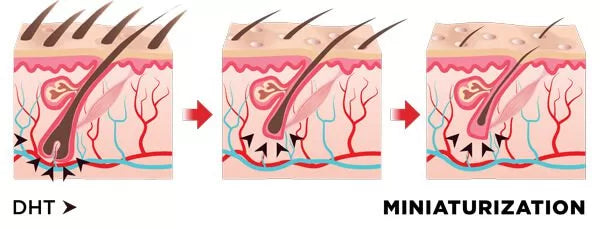
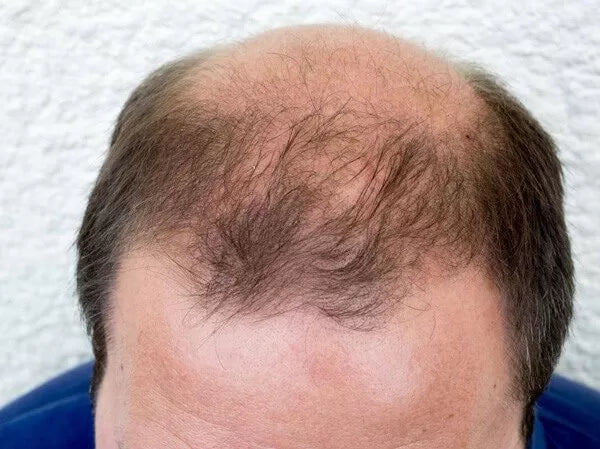
Excessive miniaturization of hair follicles results in areas of thinning and baldness
So How Can I Treat My Hair Loss?
Now that we’ve covered hair loss 101, let’s discuss how to treat androgenic alopecia. Several treatments are available for pattern hair loss. Many that you will find are unfortunately not supported by strong scientific evidence. However, there are some treatment options most medical professionals agree are effective.
- Minoxidil: A widely used hair loss treatment and the active ingredient in Rogaine, is available over the counter and by prescription in various topical forms. It increases blood flow to hair follicles, helping prevent miniaturization. Minoxidil is FDA approved for treating pattern hair loss in both men and women but may be less effective alone in advanced androgenic alopecia.
- Finasteride: Also known as Propecia, is a prescription pill that treats male pattern hair loss by blocking DHT production. It is FDA-approved, most effective in early stages, generally safe, but may cause sexual side effects in some men. It is not recommended for women.
- Dutasteride: Is an oral prescription drug that blocks DHT, like Finasteride. It may cause sexual side effects in some men and is not recommended for women. While not FDA-approved for hair loss, it is approved in other countries and can be prescribed off-label in the U.S.
- Spironolactone: Is a prescription drug used off-label for female pattern hair loss, taken orally or topically. It reduces androgen hormones like DHT but is not FDA-approved for hair loss and is not recommended for men.
- Hair transplant surgery: This process moves healthy hair follicles from the back of the head to thinning or balding areas on the scalp. There are two main types: Follicular Unit Transplantation (FUT) and Follicular Unit Extraction (FUE), with FUE being less invasive. Modern techniques have greatly improved results, making transplants look natural and permanent, even for advanced androgenic alopecia. However, the procedure is expensive, and outcomes depend on genetics, hair loss pattern, and the surgeon’s expertise. Hair transplants are usually considered after other treatments have failed.
- Platelet Rich Plasma (PRP): Is a minimally invasive, in-office procedure for hair loss. It involves drawing a small blood sample, isolating platelets, and injecting them into the scalp. The process is quick, generally painless, and may help early androgenic alopecia in both men and women. PRP is believed to promote hair regrowth through growth factors released by platelets, though research is ongoing. Similar treatments, such as stem cell or stromal vascular fraction injections, may work via comparable mechanisms.
- Low-Level Laser Therapy (LLLT): Is also known as photo-biomodulation or cold laser therapy, is a safe and effective treatment for pattern hair loss in men and women. It does not involve drugs or surgery, has no serious side effects, and can be combined with other hair-loss treatments. Several FDA-cleared LLLT devices, including The Original LaserCap, are available for treating androgenic alopecia at various stages. Check out our About Low-Level Laser Therapy page to learn more.
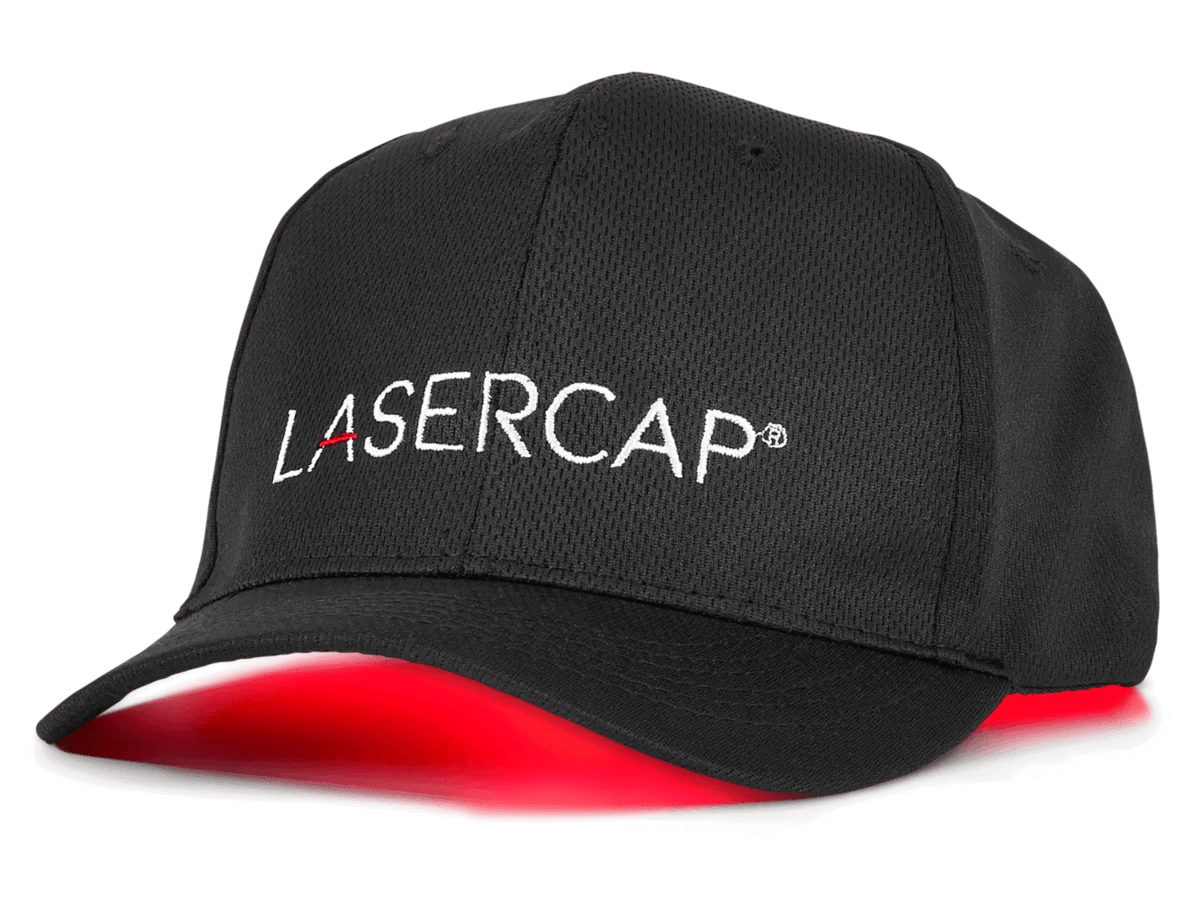
Want To Try LLLT for Your Hair Loss?